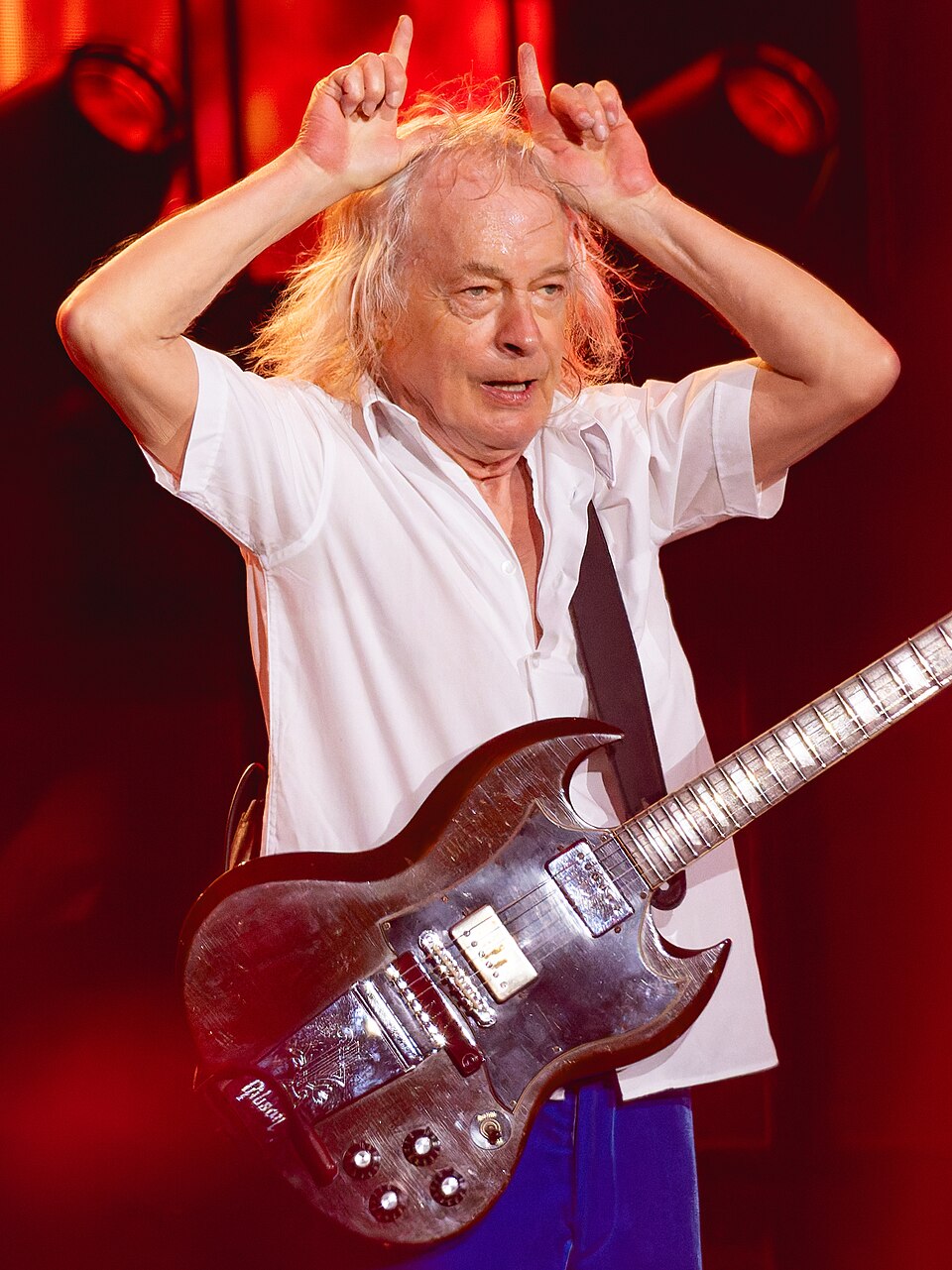
Angus Young's Electrifying Riffs & Signature Rock Style
Few names resonate as powerfully in the annals of rock and roll as Angus Young. For over four decades, the diminutive dynamo of AC/DC has captivated audiences worldwide with his high-octane stage presence, an instantly recognizable schoolboy uniform, and a ferocious guitar style that has spawned some of rock's most iconic riffs. From the thunderous opening of "Back in Black" to the electrifying charge of "Thunderstruck," Angus Young’s contributions to music are not just heard; they are felt.
His distinctive sound and unwavering commitment to a particular aesthetic have made him an enduring figure, a testament to the power of consistency and raw, unadulterated energy. Beyond the blistering solos and the legendary duck walk, there's a fascinating story of influences, gear choices, and a profound dedication to the essence of rock music that defines the legend of Angus Young.
The Dynamo Behind the Riffs: Angus Young's Early Life and Influences
Born in Glasgow, Scotland, Angus Young embarked on a life-altering journey at a young age when his large family, fifteen members strong, emigrated to Australia. It was in his new home that his passion for the guitar truly ignited. Eschewing formal training for the raw education offered by his heroes' records, Young immersed himself in the sounds that would shape his unique approach.
His sonic palette was rich and varied, drawing inspiration from the trailblazers who forged rock and blues. He meticulously studied the innovative fretwork of rock legends like Jimi Hendrix and Pete Townshend of The Who, absorbing their melodic aggression and pioneering techniques. The raw, emotive power of blues giants such as Freddie King and Muddy Waters also profoundly influenced his phrasing and feel, imbuing his playing with a soulful depth often overlooked amidst his blistering speed.
However, perhaps no single artist influenced Young's electrifying stage persona more than the rock and roll pioneer, Chuck Berry. Berry's charismatic showmanship, particularly his iconic duck walk, left an indelible mark on Angus Young. It was this blend of blues authenticity, rock energy, and theatrical flair that Angus would synthesize into his own legendary performance style, making him one of the most exciting performers in rock history. To delve deeper into the artists who shaped this legend, explore Unraveling Angus Young: Influences, Gear & Legendary Career.
The Unmistakable Sound: Angus Young's Signature Guitar and Gear
In an industry often characterized by musicians constantly chasing the next big sound or the latest piece of gear, Angus Young stands out for his steadfast devotion to simplicity. Throughout his entire illustrious career with AC/DC, from the raw energy of their early 1970s shows to their stadium-filling performances today, Young has notoriously relied on one guitar model: the Gibson SG.
While many guitar heroes maintain an arsenal of diverse instruments to achieve varying tonal landscapes, Angus Young's philosophy is refreshingly straightforward: "If it ain't broke, don't fix it." This mantra extends not just to his choice of guitar but also to his amplification, primarily Marshall amps, which provide the powerful, crunching backbone of AC/DC's sound. His preference leans towards early models, specifically SGs from the 1960s and 1970s, which he believes offer the best tone and feel. This unwavering loyalty to a specific setup has allowed him to develop a truly signature sound – one that is immediately identifiable and universally celebrated.
When touring, instead of lugging dozens of instruments, Young typically keeps his setup lean and mean: a primary Gibson SG, a backup in case the first goes out of tune, and a third just in case of a more serious breakdown. All, without exception, are SGs. This practical approach ensures consistency in his live sound and minimizes potential technical disruptions, allowing him to focus entirely on his performance.
The Legendary 1967 Gibson SG Standard
Among his cherished collection of Gibson SGs, one guitar holds a particularly special place: his black 1967 Gibson SG Standard. Young acquired this instrument in 1977, just before the recording of the seminal "Let There Be Rock" album. Initially unsure of its exact vintage, guessing it was a '70 or '71 model, the serial number on the headstock eventually revealed its true identity as a 1967 model. It was love at first strum.
This particular SG quickly became Angus Young's primary player, gracing every studio album and stage performance from 1977 right through to AC/DC's "Rock or Bust" tour in 2016. Its rich, resonant tone and comfortable playability perfectly complemented his aggressive playing style. While it remains his primary studio guitar, Young has chosen to retire it from the rigors of live performance to preserve its integrity, a testament to how deeply he values this instrument.
Remarkably, despite decades of relentless use and the profuse sweating characteristic of his high-energy stage antics, which notoriously damages electronics, the 1967 SG has undergone very few structural alterations. Though he has had to replace the potentiometers (pots) dozens of times due to sweat corrosion, Young always ensures they are swapped out with components that maintain the guitar's original sonic character. For a deeper dive into his choice of instrument, read Angus Young's Iconic Guitars: The Gibson SG Story.
The Schoolboy Uniform and Stage Antics: A Visual Icon
Beyond the music, Angus Young has crafted an indelible visual identity that is as iconic as his riffs. The schoolboy uniform, complete with shorts, blazer, and cap, is more than just a costume; it's an extension of his dynamic persona. This playful yet rebellious attire, combined with his frenetic stage movements like the aforementioned duck walk (a direct homage to Chuck Berry) and his signature convulsive spasms, transforms every AC/DC concert into a spectacle.
This commitment to a consistent visual style amplifies his stage presence, making him instantly recognizable even from the back rows of a massive arena. It’s a brilliant synergy where the visual and auditory elements converge to create an unforgettable experience. The sheer physical intensity of his performances is legendary – the sweat pouring from him is a physical manifestation of the energy he pours into every note. This raw, unbridled passion is what truly connects him with millions of fans worldwide.
Mastering Simplicity: Lessons from Angus Young's Approach
Angus Young's career offers invaluable lessons for aspiring and established musicians alike, particularly his philosophy of "mastering simplicity." In a world obsessed with technological advancements and endless gear options, Young's steadfast reliance on his core tools – the Gibson SG and Marshall amps – underscores the idea that often, less is more. Here are some practical takeaways:
- Find Your Sound, Stick With It: Instead of constantly searching for new tones, Angus perfected his distinct crunch with a consistent setup. This allows a musician to truly become one with their instrument and amplifier, understanding every nuance of their output.
- Prioritize Playability and Reliability: His preference for vintage SGs isn't just about nostalgia; it's about finding instruments that feel right and consistently deliver. For touring musicians, a reliable, simple setup minimizes technical issues and maximizes performance quality.
- Maintenance is Key: Even with a simple setup, regular maintenance is crucial. Young’s meticulous care for his guitars, particularly replacing damaged components with appropriate parts, ensures his gear can withstand the rigors of his intense performances.
- Embrace Your Influences, Find Your Voice: While Young openly credits his heroes, he never simply imitates. He integrated their lessons into his unique style, creating something entirely original and enduring.
- Performance as an Extension of Music: His visual theatrics are not separate from his music; they are an integral part of the AC/DC experience. Understanding how your stage presence enhances your musical message is vital for engaging audiences.
Conclusion
Angus Young stands as an undisputed titan of rock music, a living embodiment of high-voltage energy and unadulterated passion. His electrifying riffs, legendary stage antics, and unwavering dedication to his signature sound have not only defined AC/DC but have also left an indelible mark on the landscape of rock and roll. From his humble beginnings in Scotland to headlining global stages, Angus Young's journey is a testament to the power of authentic expression and the timeless appeal of a truly iconic rock style. His legacy is not just in the millions of albums sold or the sold-out stadiums, but in the countless guitarists he has inspired and the enduring thrill of his raw, powerful music.