Unraveling Angus Young: Influences, Gear & Legendary Career
In the pantheon of rock and roll legends, few figures burn as brightly and consistently as Angus Young. For over 50 years, the diminutive dynamo of AC/DC has captivated audiences worldwide with his signature schoolboy uniform, electrifying stage antics, and some of the most recognizable guitar riffs ever penned. From the thunderous opening of "Back in Black" to the driving urgency of "Thunderstruck," Young's unique blend of raw power and melodic ingenuity has carved an indelible mark on music history. This article delves into the formative influences that shaped his distinctive style, the surprisingly minimalist gear that became an extension of his musical identity, and the enduring legacy of his action-packed career.
The Roots of a Rock Legend: Formative Influences
Born in Scotland, Angus Young embarked on an early migration with his large family to Australia, a move that would inadvertently place him at the epicenter of a burgeoning rock scene. His early musical education was a self-taught journey through the sonic landscapes of various rock and blues pioneers. Unlike many guitarists who might focus on a singular genre, Young's influences were remarkably diverse, laying a rich foundation for his distinctive sound.
- Rock & Roll Architects: The high-octane energy and showmanship of Chuck Berry were paramount. Berry's duck walk and flamboyant stage presence were not just observed by Young but absorbed and amplified, becoming a cornerstone of his own iconic performances. This influence is evident in the dynamic, movement-heavy approach Young brought to every AC/DC show.
- British Invasion Powerhouses: Young keenly listened to the raw power and innovative songwriting of British rock giants like Jimi Hendrix, whose exploratory guitar work pushed boundaries, and Pete Townshend of The Who, renowned for his aggressive rhythm playing and stage smashing antics. The Kinks, with their punchy riffs and rebellious attitude, also contributed to Young's developing palate.
- Blues Masters: Crucially, Angus Young also immersed himself in the soulful, gritty sounds of blues legends such as Freddie King and Muddy Waters. This exposure to blues guitar provided a deep well of melodicism and feel that permeates even AC/DC's most driving rock anthems. The bend-heavy solos and call-and-response phrasing often found in Young's work are direct descendants of these blues traditions.
This eclectic mix of influences allowed Angus Young to forge a style that was simultaneously rooted in tradition and aggressively forward-thinking. He didn't merely imitate; he synthesized, taking the raw power of rock, the melodic backbone of the blues, and the showmanship of early pioneers to create something uniquely his own. For aspiring guitarists, Young's journey is a powerful reminder that true originality often stems from a broad and deep appreciation of diverse musical traditions.
The Signature Sound: Gear That Defined a Career
When it comes to equipment, Angus Young stands in stark contrast to many of his guitar hero peers. While others might constantly swap out guitars, experiment with elaborate pedalboards, or chase the latest technological advancements, Young has famously adhered to an "if it ain't broke, don't fix it" philosophy. This unwavering loyalty to a specific setup has been instrumental in crafting AC/DC's instantly recognizable sound.
The Unwavering Loyalty to the Gibson SG
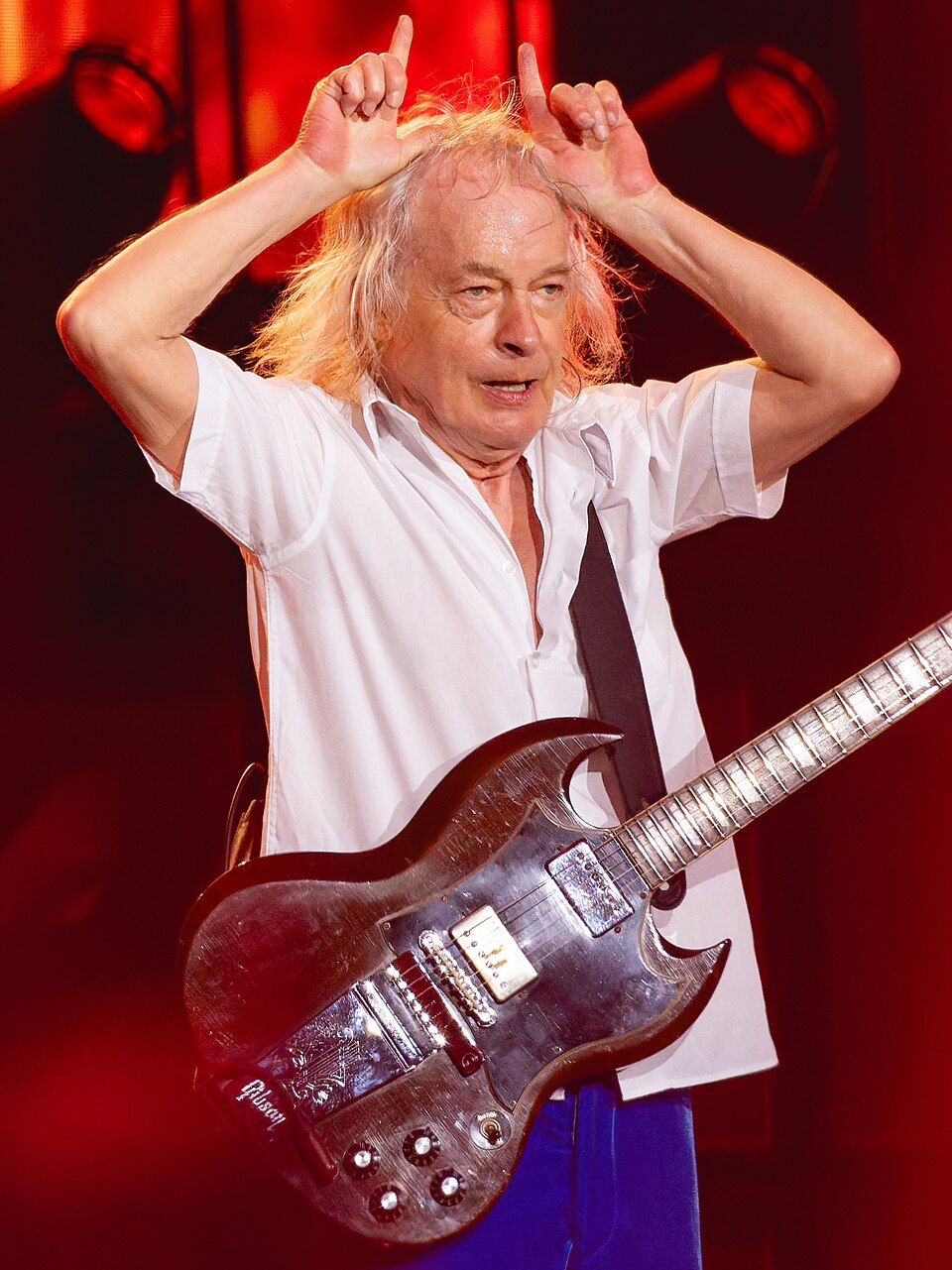
Perhaps the most iconic piece of equipment associated with Angus Young is the Gibson SG. From the band's earliest pub gigs to sold-out stadium tours decades later, the SG has been Young's steadfast companion. He has notoriously used only one model of guitar throughout his entire career. This singular focus on the SG speaks volumes about his understanding of tone and his ability to extract a vast range of sounds from a consistent platform.
Young isn't just loyal to the SG model; he specifically gravitates towards early models, particularly those from the 1960s and 1970s. These guitars, known for their lightweight bodies, powerful humbuckers, and comfortable neck profiles, provide the perfect foundation for his energetic playing style. On tour, while many professional guitarists bring an arsenal of dozens of instruments, Young typically keeps things remarkably simple, usually bringing just three SGs: a primary player, a backup for tuning issues, and a spare in case of breakage. This minimalist approach underscores his confidence in his chosen instrument and his focus on performance over an elaborate gear rig.
The Legendary 1967 Gibson SG Standard
Among his collection of SGs, one guitar holds a particularly special place: a black Gibson SG with a black pickguard, which Angus Young acquired in 1977, just before the recording of the seminal "Let There Be Rock" album. Initially unsure of its exact vintage, the serial number later confirmed it to be a 1967 model. This guitar quickly became his primary player, defining the sound of AC/DC from 1977 through the "Rock or Bust" tour in 2016.
This particular SG has seen countless stages and studio sessions. Today, out of a desire to preserve its legacy, Young primarily reserves it for studio work, allowing it to continue contributing to AC/DC's recordings while protecting it from the rigors of live performance. Remarkably, given its extensive use and Young's famously sweat-drenched performances, the guitar has undergone surprisingly few alterations. The most frequent maintenance item has been the replacement of its potentiometers (pots), which often succumb to the corrosive effects of his prodigious stage sweat. Each time, Young ensures that the original specifications are meticulously maintained, a testament to his dedication to his tried-and-true sound.
Amplification: Marshall's Roar
Complementing his Gibson SG, Angus Young has consistently relied on Marshall amplifiers to deliver AC/DC's iconic roar. The combination of the SG's biting tone with the raw power and headroom of Marshall stacks creates the quintessential hard rock sound that defines the band. This pairing is a classic for a reason: the humbucker-equipped SG pushing the valves of a Marshall amp generates a thick, harmonically rich distortion that is both aggressive and articulate. For aspiring guitarists, understanding this fundamental synergy between specific guitar and amp combinations is a crucial step in developing a unique tonal identity.
The Legendary Career and Electrifying Performance Style
Beyond the gear and influences, Angus Young's legendary career is equally defined by his relentless energy and captivating stage presence. His decision to adopt a schoolboy uniform, initially a humorous gag suggested by his sister Margaret, became an iconic visual statement that perfectly encapsulated AC/DC's rebellious spirit.
His high-energy antics—the head-banging, the running, the rolling on the floor, and of course, the famous duck walk inherited from Chuck Berry—are not just showmanship; they are an integral part of the AC/DC experience. This physical commitment to performance ensures that every show is a visceral, unforgettable event. His ability to maintain this level of intensity for decades is nothing short of extraordinary.
Angus Young's contribution to rock extends far beyond his stage persona. He has crafted some of the most enduring electrifying riffs and signature rock styles in history, securing his place at number 24 on Rolling Stone's list of the 100 Greatest Guitarists. His approach to riff writing is often characterized by its simplicity, memorability, and undeniable groove, proving that sometimes the most effective musical statements are the most direct.
Conclusion
Angus Young is more than just a guitarist; he is a force of nature, a rock and roll phenomenon whose influence reverberates across generations. From his early exposure to diverse musical heroes to his unwavering commitment to his Gibson SG and Marshall amps, every aspect of his journey has contributed to his status as an icon. His unique blend of raw blues power, hard rock aggression, and unparalleled showmanship has not only propelled AC/DC to global superstardom but has also inspired countless musicians to pick up a guitar and unleash their own inner rock star. The enduring legacy of Angus Young is a testament to the power of authenticity, dedication, and the sheer, unadulterated joy of rock and roll.