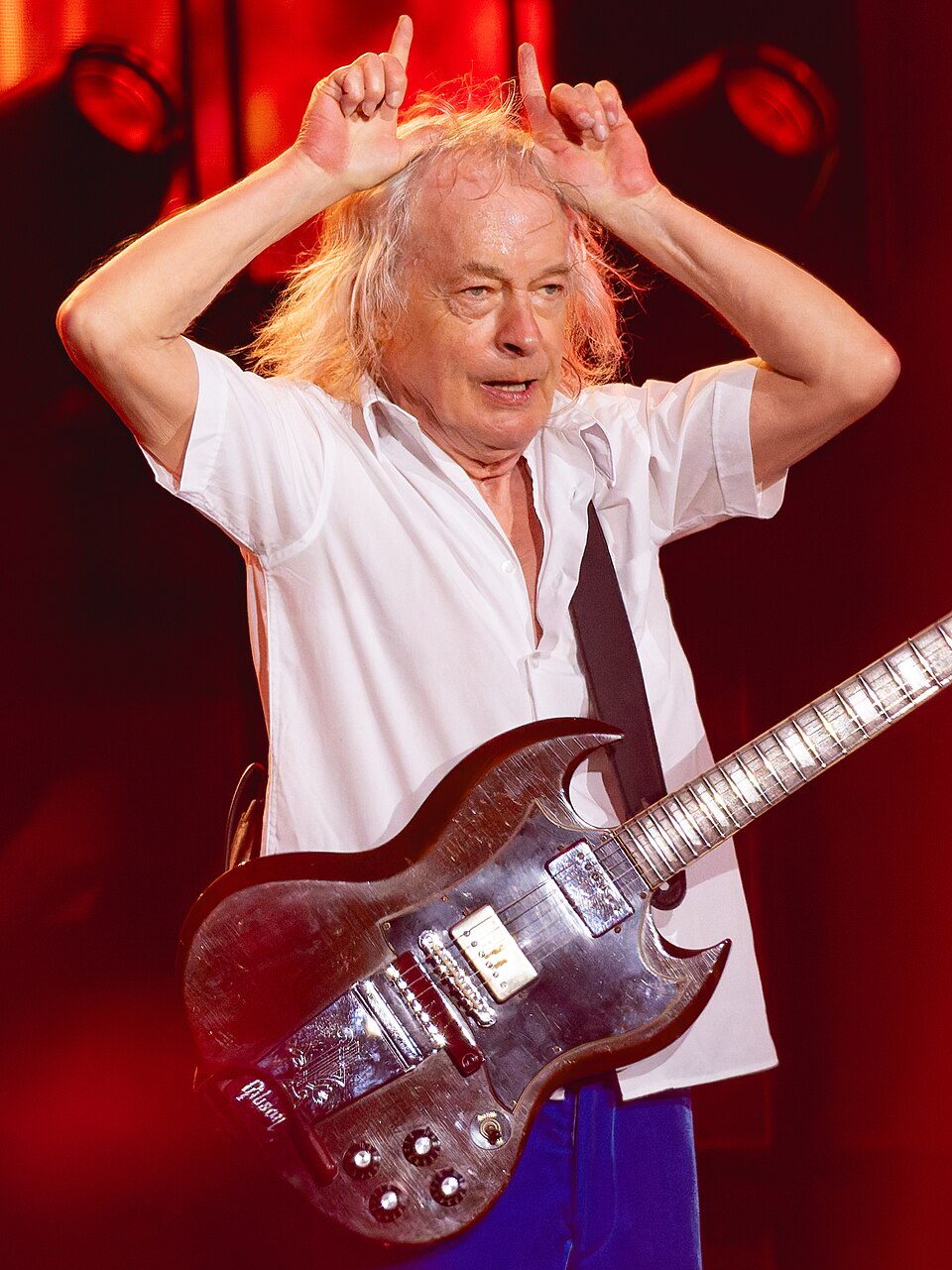
Angus Young's Iconic Guitars: The Gibson SG Story
When you picture AC/DC's live performances, two images immediately spring to mind: the raw, electrifying energy of a schoolboy-uniformed guitarist, and the distinctive silhouette of a Gibson SG. For over five decades, **Angus Young** has not just played the Gibson SG; he has become synonymous with it, forging an unbreakable bond between a rock and roll legend and his instrument of choice. His high-voltage stage antics, signature duck walk, and groundbreaking riffs like "Back in Black" and "Thunderstruck" have earned him a revered spot in rock history, landing him at number 24 on Rolling Stone's list of 100 Greatest Guitarists of All Time. Yet, unlike many guitar heroes who cycle through a diverse arsenal of instruments, Angus has remained steadfastly loyal to a single model, crafting a powerful, instantly recognizable sound that is as much a testament to his talent as it is to the enduring appeal of his beloved Gibson SG.
The Unmistakable Sound of Angus Young and the Gibson SG
Born in Scotland and raised in Australia, **Angus Young** developed his unique playing style by absorbing the influences of rock pioneers like Jimi Hendrix and Pete Townshend, alongside blues legends such as Freddie King and Muddy Waters. However, it was Chuck Berry's showmanship that truly inspired Young's high-energy stage presence. To translate this boundless energy into sound, Angus found his perfect partner in the Gibson SG. From the earliest AC/DC shows in the 1970s through countless studio albums and global tours, the SG has been his unwavering companion. This singular dedication is remarkable in the guitar world, where many artists employ a vast array of guitars to achieve different tonal textures. Angus, however, adheres to a philosophy of "if it ain't broke, don't fix it," prioritizing simplicity and consistency in his gear setup, often paired with his trusty Marshall amplifiers. This commitment to one model has allowed him to intimately understand its nuances, pushing its capabilities to define a signature sound that is both aggressive and articulate. The SG's lightweight design and excellent upper-fret access are also perfectly suited for his frenetic solos and physical stage performance, allowing him to move freely and deliver those unforgettable power chords and rapid-fire licks. For a deeper dive into his playing style, check out
Angus Young's Electrifying Riffs & Signature Rock Style.
A Deep Dive into Angus's Preferred SGs: The Vintage Charm
While **Angus Young** is fiercely loyal to the Gibson SG model, he does have a clear preference for early versions, particularly the 1960s and 1970s models. These vintage SGs possess a certain character and feel that modern counterparts, while excellent, often struggle to replicate. The specific wood aging, neck profiles, and original hardware components of these older instruments contribute to their unique resonance and playability. Among his prized possessions, a black 1967 Gibson SG Standard holds a particularly legendary status. Angus acquired this guitar in 1977, just before the recording of the seminal "Let There Be Rock" album. Initially unsure of its exact year, the serial number later confirmed it was a '67 model, a year highly regarded by guitar enthusiasts.
This particular SG quickly became his primary workhorse. It was featured prominently on "Let There Be Rock" and remained his main stage and studio guitar through AC/DC's "Rock or Bust" tour in 2016. Its rich history and battle scars tell a story of countless electrifying performances. Interestingly, despite decades of relentless use and **Angus Young's** notoriously sweaty stage presence – which, as you might imagine, takes a toll on electronics – the guitar has undergone surprisingly few permanent alterations. The potentiometers (pots) have been replaced numerous times due to sweat damage, but each time, Angus ensures they are swapped with original-style components to maintain the guitar's authentic tone and feel. This meticulous approach highlights his dedication to preserving the integrity of his beloved instrument. Today, this iconic 1967 SG has been retired from active touring duty to prevent further wear and tear, now serving exclusively as a studio instrument, ensuring its legendary sound continues to grace future AC/DC recordings.
Beyond the Stage: Angus Young's Touring and Studio Philosophy
**Angus Young's** approach to touring gear starkly contrasts with many other professional guitarists. While some artists might bring dozens of guitars on the road to achieve various tones or simply as backups, Angus keeps it remarkably simple. His touring rig typically comprises just three Gibson SGs: his primary player for the bulk of the show, a backup for quick swaps if the primary goes out of tune, and a third backup in case of any unexpected breakage. Crucially, all three are SGs, ensuring consistent tone and feel throughout the performance, regardless of which guitar he's wielding. This "less is more" philosophy underscores his confidence in the SG's reliability and versatility.
This minimalist approach offers valuable insights for aspiring guitarists. It emphasizes the importance of mastering a core sound with a few trusted instruments rather than chasing an endless array of gear. For Angus, the consistency across his SGs means there are no surprises; he knows exactly how each guitar will react to his touch, his amp, and the rigors of a live show. His decision to relegate his cherished 1967 SG to studio-only use also speaks volumes about preserving instruments with significant personal and historical value. It's a practical lesson in balancing performance demands with the longevity of a treasured piece of equipment. The studio environment, being more controlled, allows him to capture the nuanced sonic qualities of his vintage SG without the risk of further stage-related damage. For a broader perspective on his journey and equipment choices, explore
Unraveling Angus Young: Influences, Gear & Legendary Career.
The Legacy of the SG: Why it Endures with Angus Young
The enduring partnership between **Angus Young** and the Gibson SG is a testament to the guitar's design and its perfect synergy with his unique performance style. The SG's lightweight, double-cutaway body provides unparalleled access to the upper frets, essential for his lightning-fast solos and intricate riffing. Its relatively thin body prevents it from feeling cumbersome during his famously energetic stage movements, allowing him to duck walk, jump, and spin without inhibition. Sonically, the SG's mahogany body and humbucking pickups deliver a powerful, mid-focused punch that cuts through the densest mix, perfectly complementing AC/DC's raw, blues-infused hard rock sound.
Beyond its ergonomic and sonic advantages, the Gibson SG has become an integral part of **Angus Young's** visual identity. Its sharp, devil-horned contours, often in black or cherry red, visually reinforce the rebellious spirit of rock and roll and the raw energy of AC/DC. It's an instrument that looks as aggressive as it sounds, making it the ideal aesthetic counterpart to his schoolboy uniform persona. Through decades of relentless touring, iconic album covers, and unforgettable music videos, Angus Young has not only cemented his own legend but has also elevated the Gibson SG to an iconic status in the annals of rock history, making it virtually impossible to think of one without the other.
In conclusion, **Angus Young's** unwavering dedication to the Gibson SG is more than just a preference; it's a foundational element of his legendary career. From the raw power of his earliest riffs to the enduring thunder of AC/DC's latest anthems, the SG has been his voice, translating his fiery passion and electrifying energy into the timeless sound of rock and roll. His story is a powerful reminder that sometimes, true innovation lies not in constant change, but in the masterful command of a single, iconic instrument.